

Laser-resistant endotracheal tube.
Tenax®
Tenax® is a single-use, laser-resistant silicone endotracheal tube, designed by clinical experts to provide maximum protection against surgical fires and minimise tissue trauma to the airway. Featuring a reinforced aluminium spiral body, a DualCuff™ double-cuff system with a blue dye indicator, and compatibility with CO₂, KTP and 445 nm blue lasers, Tenax® helps ensure safer procedures and comprehensive protection during head and neck surgery.
Key features that make it the best choice
- Laser resistance: Reinforced body with an aluminium spiral to help reduce the risk of airway fires.
- Smooth outer surface: Soft, flexible silicone coating designed to minimise trauma to the vocal cords and airway mucosa.
- Flexible, preformed design: Adapts to the trachea and facilitates placement.
- Low-profile design: The deflated cuffs fit closely against the tube body, maintaining a narrow profile.
- Latex-free: Manufactured without latex.
- Stylet included: Each Tenax® tube is supplied with a stylet.
- Ref. TN-0050-SET: 5 mm internal diameter, 7.9 mm external diameter and 34 cm length.


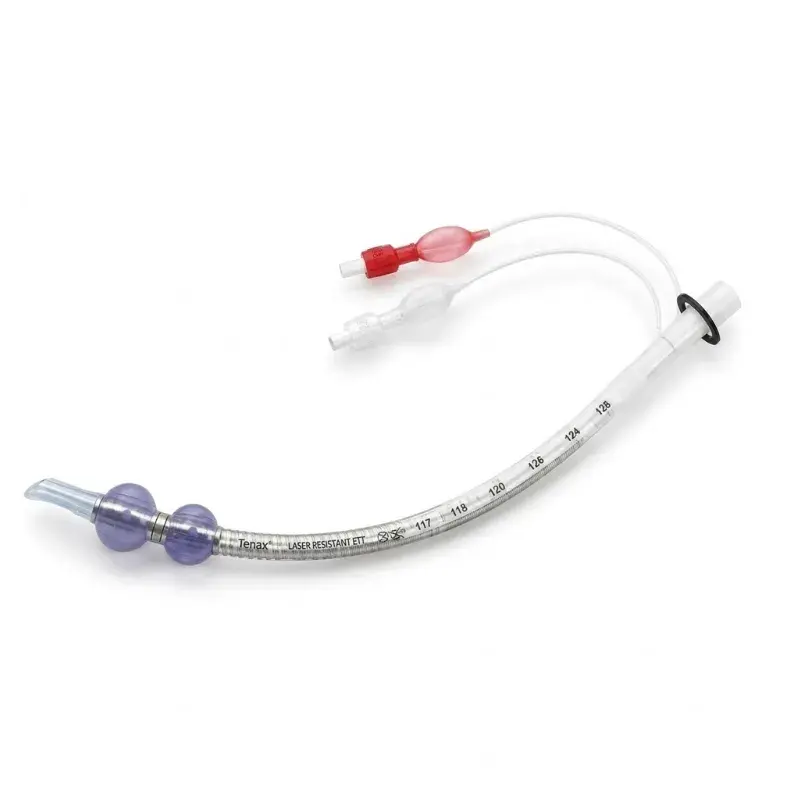
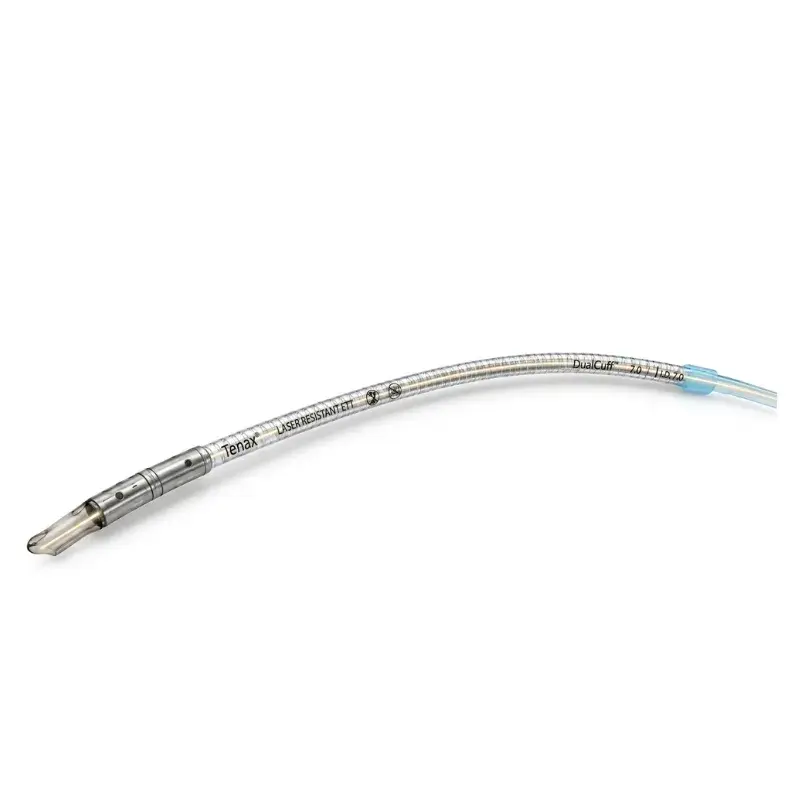
Designed to minimise airway trauma.
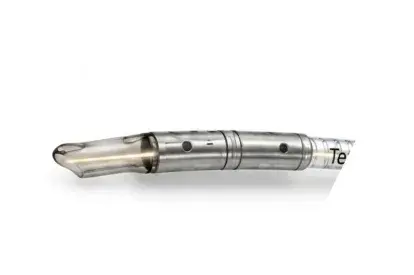
Slim profile
When deflated, the cuffs lie close against the tube body, maintaining a low profile that facilitates visualisation of the vocal cords.
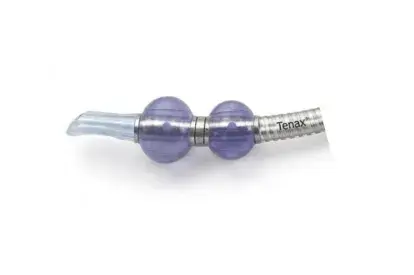
Tenax® DualCuff™: An Extra Layer of Protection
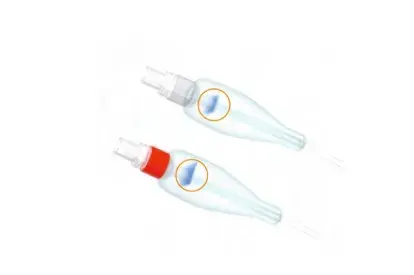
Tenax® DualCuff™ provides a double seal to reduce the risk of perforation and fire caused by scattered laser radiation.
Integrated blue dye
The blue dye alerts the surgeon if a cuff is accidentally punctured or damaged.
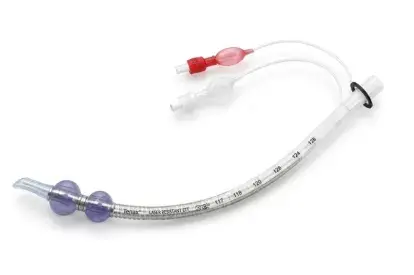
Flexible, preformed design that conforms to the trachea.
The smooth, flexible silicone outer surface minimises trauma to the vocal cords and surrounding anatomy..
Laser Procedures in the Airway
- Laser-resistant endotracheal tubes are commonly selected for surgical procedures in which laser energy is applied near the airway. Typical applications include:
- Laser laryngoscopy
- Microlaryngoscopy
- Transoral laser microsurgery (TLM)
- Vocal cord surgery
- Laryngeal surgery
- Airway stenosis procedures
- Papilloma removal
- Laser head and neck surgery
- Upper airway reconstruction
Compatible Laser Systems
- CO₂ laser (10.60 μm)
- KTP laser (532 nm)
- 445 nm blue laser
Documentation